Burst Pipe? Here's Exactly What to Do Before the Plumber Arrives
A step-by-step guide for North Johannesburg homeowners on how to handle a burst pipe emergency, minimise water damage, and get professional help fast.
Our professional service team handles the devastating aftermath of water damage daily. Burst Pipe? Here is the reality we share with every client. The resulting flood can turn a beautiful Sandton home into a swamp within minutes.
From what our plumbers have seen, rapid action in the first ten minutes is the dividing line between a quick cleanup and an expensive structural disaster.
A minor leak can cause tens of thousands of rands in damage.
Let’s look at the critical steps you must take immediately. We will explain exactly how to protect your property and manage the insurance process.
Step 1: Shut Off the Main Water Supply
Our plumbers respond to these plumbing emergencies constantly across Bryanston and Fourways. The very first thing you must do when you discover a leak is turn off the main water supply to your property. Stopping the flow immediately limits the damage to your home. We strongly advise clients to locate their stopcock valve before an emergency strikes. Every home in North Johannesburg has this valve. You will usually find it near the water meter at the boundary wall or inside the garage.
How to Find Your Stopcock
- Boundary wall or pavement: Look for a small metal or plastic cover near the street and turn the valve clockwise.
- Garage or utility room: Newer homes in estates like Dainfern or Lonehill often have the main valve inside the property.
- Ask your estate manager: The body corporate may control the main supply if you live in a sectional title complex.
Our data shows that a municipal connection delivers water at significant pressure. This pressure frequently exceeds 600 kPa in parts of Gauteng. Even a small break releases hundreds of litres of water per hour at that force. We highly recommend familiarising yourself with this valve location today.
Step 2: Turn Off the Electricity
Our safety protocols require treating water and electricity as a highly dangerous combination. Switch off the main breaker immediately if the water is near electrical outlets or your distribution board. Taking this step protects your family from severe hazards. We see increased risks during load shedding periods across the province. Many North Johannesburg homes rely on Sunsynk or Deye inverters for backup power. These battery systems present a unique challenge during a flood.
Safety Checklist
- Switch off the main breaker at your distribution board immediately.
- Do not touch any electrical appliances standing in water.
- Keep your inverter system in mind, as it may still supply power.
Our technicians witness how backup power still flows through wet circuits during grid outages. The risk of electrocution increases dramatically when power returns unexpectedly. Water acts as a perfect conductor for these stray currents. We urge you to evacuate the area if you smell burning or see sparks.
Step 3: Drain the System
Our next crucial step involves clearing out the remaining water. Open all cold water taps in the house once the main supply is off. This simple action reduces the system pressure immediately. We find that draining the pipes minimises the leaking water significantly. A standard 150L or 200L geyser holds a massive amount of water. That stored water can still cause severe flooding on your property.
Draining Hot and Cold Lines
- Open all cold water taps to relieve immediate pressure.
- Turn off your geyser at the distribution board.
- Open the hot water taps to drain the cylinder safely.
- Flush all toilets once to empty the cisterns completely.
Our experience shows that hot water lines require extra attention. Turn off your geyser at the distribution board if the leak is on a hot line. Opening the hot taps will safely drain the cylinder. We advise flushing all toilets to ensure no extra water remains in the upper levels of your home.
Step 4: Contain the Water Damage
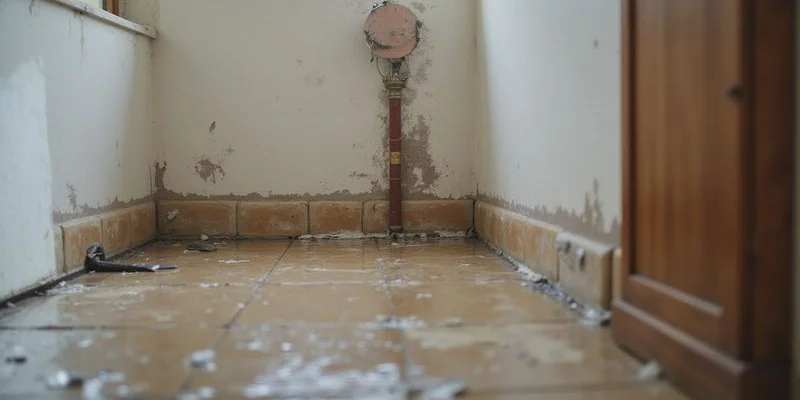
Our damage assessment reports indicate that water damage restoration in South Africa averages between R18,000 and R75,000. Focus on containing the water that has already escaped while the system drains. Protecting your most valuable items first is essential. We suggest using every available resource to dry the area. Wet carpets left in place for more than 48 hours become breeding grounds for mould. This hazard thrives during Johannesburg’s humid summer months.
Immediate Actions
- Move furniture and valuables away from the affected area.
- Use towels, mops, and buckets to soak up standing water.
- Place containers under any dripping points.
- Open windows to improve ventilation and start drying.
Our specialists track the rising costs of property repairs. Fixing water-damaged drywall alone costs up to R500 per square metre in 2026. Opening windows immediately improves ventilation and helps prevent secondary moisture damage. We tell every homeowner to lift wet carpets as soon as possible.
Step 5: Locate the Burst
Our teams find that pointing out the exact location saves valuable time for the technician. Try to identify exactly where the pipe broke if it is safe to do so. Finding the source allows the plumber to dispatch the right equipment. We use this information to secure the site faster. The Water Research Commission reports that 41% of metallic pipe failures in Johannesburg happen due to external corrosion. Older galvanised steel, copper, and Polycop lines all have distinct failure points.
Common Burst Locations
- Under the kitchen sink: Flexible connectors and joints frequently fail.
- In the ceiling: Geyser supply lines are vulnerable to pressure surges.
- Underground: A spinning meter with closed taps indicates a supply line break.
- In the walls: Listen for the sound of running water in bathrooms.
Our field data highlights several common problem areas. Check under the kitchen sink for failed flexible connectors. Listen for the sound of running water behind bathroom walls — professional leak detection can pinpoint hidden breaks without damaging your property. We strongly advise against attempting permanent repairs yourself. Applying a temporary clamp can slow the leak while you wait. Only a qualified professional should complete the final fix.
Never attempt to solder or permanently repair pipes yourself unless you are a qualified plumber. In South Africa, all plumbing work affecting the water supply must be carried out by a registered plumber in compliance with SANS 10252.
Step 6: Document the Damage
Our insurance liaison team knows how critical photographic evidence is for a successful claim. Take photographs and video of all water damage before you start cleaning up. Delayed documentation frequently leads to rejected claims. We see cases daily where homeowners lose thousands due to missing proof. Over 25% of household insurance claims in South Africa relate to water infrastructure. Your documentation is your best financial defense.
The Impact of Proper Documentation
| Action Taken | Insurance Impact | Financial Consequence |
|---|---|---|
| Reporting within 30 days with photos | Smooth claim approval with Santam or OUTsurance | Full coverage for R18,000+ water damage |
| Delaying documentation or cleanup | High risk of claim rejection | Out-of-pocket costs for severe mould remediation |
Our guidelines align with major insurers like Santam and OUTsurance. These companies require you to lodge claims within 30 days of the incident. Capturing the water meter reading helps dispute excessive municipal bills. We guarantee that having clear proof makes the process move much faster.
Step 7: Call an Emergency Plumber
Our emergency lines remain open because plumbing disasters ignore regular business hours. It is time to call a professional once the immediate crisis is contained. Checking specific credentials protects you from unqualified contractors. We advise verifying PIRB registration before allowing anyone to start work. A local professional can reach Bryanston or Midrand much faster than someone crossing the city. Response time is everything during a crisis.
What to Look For
- 24/7 availability: Ensure they answer calls outside business hours.
- PIRB registration: The Plumbing Industry Registration Board ensures compliance.
- Local presence: Local plumbers bypass heavy city traffic to reach you faster.
- Transparent pricing: Demand a call-out fee quote upfront.
Our latest market research shows that average plumbing call-out fees in 2026 range from R450 to R750. Emergency after-hours fees jump to R1,300, excluding the hourly labour rate. Always ask for a transparent price breakdown upfront. We provide a dedicated emergency plumbing service that covers all of North Johannesburg with rapid response times and clear pricing.
Burst Pipe? Here Is Why They Are So Common in North Johannesburg
Our ongoing field work highlights why these plumbing failures happen so frequently. Understanding why pipes burst helps you prevent future incidents. Monitoring the local infrastructure challenges gives you a significant advantage. We closely track the issues affecting our clients. Johannesburg Water faces an enormous infrastructure backlog requiring an estimated R27 billion in upgrades. The system is under severe strain.
Municipal Pressure Fluctuations
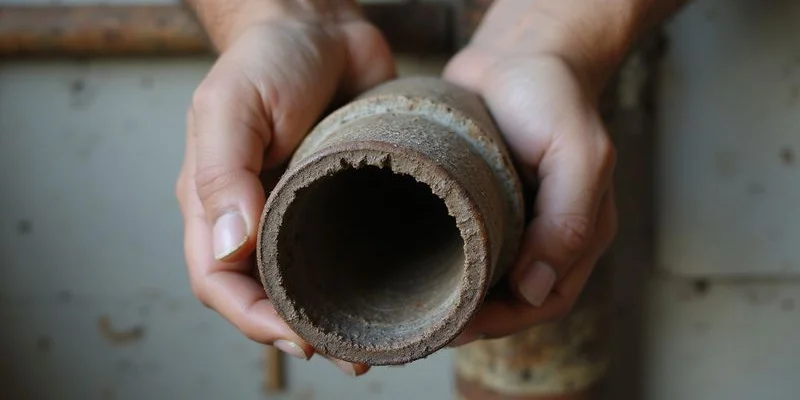
Our data from early 2026 shows the municipality experienced 22 major outages in just two weeks. Pressure surges frequently cause weakened lines to fail after maintenance. Homes in Lonehill and Douglasdale are particularly susceptible to these municipal fluctuations. We often replace old galvanised steel pipes from the 1970s and 1980s as part of our pipe repair services. These materials corrode internally and become brittle over decades.
Load Shedding Impact
Our technicians observe that pressure-boosting pumps in estates stop working during power outages. The sudden surge of pressure through a depressurised system triggers bursts when the grid turns back on. Rapid temperature swings across the Highveld also cause repeated expansion and contraction. We have compiled a detailed guide on how load shedding causes plumbing emergencies.
Preventing Future Burst Pipes
Our preventative maintenance programs save homeowners thousands of rands annually. You can take proactive steps to protect your property right now. Scheduling a simple visual inspection is the best starting point. We recommend taking action before the rainy season begins. Annual inspections catch small weaknesses before they turn into major floods. This is vital for homes older than 20 years.
Key Preventative Measures
- Regular Inspections: Have a professional check your system annually.
- Pressure Reducing Valves: Install a PRV to stop dangerous pressure spikes.
- Pipe Replacement: Upgrade old galvanised steel to modern copper or HDPE.
Our installations strictly follow the SANS 10252 requirement limiting domestic water pressure to 400 kPa. Installing a pressure reducing valve protects your entire system from dangerous spikes. Consider a full repipe with modern copper or HDPE piping if your home still uses galvanised steel. We handle burst geysers every single week. A faulty thermostat causes excessive pressure buildup and catastrophic failure. You can explore our resources on geyser installation and maintenance to keep your system safe.
When to Call Johannesburg Water vs a Private Plumber
Our dispatchers frequently help callers determine who is responsible for the repair. The municipality handles the issue if the leak is between the water meter and the street. Contacting them on 011 375 5555 is the correct procedure. We advise logging a fault through their website as well. The official turnaround time for municipal repairs is 24 to 48 hours. High call volumes frequently cause severe delays.
The official turnaround time for municipal burst pipe repairs is 24 to 48 hours. High call volumes frequently delay response times, so logging the fault immediately on their website is crucial.
Our rule of thumb is simple. You need a private plumber if the break happens anywhere on your private property. Taking ownership of internal plumbing ensures faster resolution. We are ready to step in when you need immediate help.
Final Thoughts
Our team understands that a plumbing failure is deeply alarming. You can minimise the impact by acting quickly to shut off the water and cut the electricity. Following these steps gets your home back to normal much faster. We know that preparation is your best defense against lasting damage.
Burst Pipe? Here is your signal that a rapid response makes all the difference. Do not wait for the water to cause further destruction. Contact our emergency plumbing team for immediate assistance across Bryanston, Sandton, Fourways, Randburg, Midrand, and surrounding areas. We are available 24 hours a day, 7 days a week.