Copper vs PEX Piping: Which Is Better for South African Homes?
Choosing between copper and PEX for your repiping project? We compare durability, cost, installation time.
We constantly see property owners struggling with aging infrastructure, often asking the exact question of Copper vs PEX Piping: Which Is Better for South African Homes? Deciding between these materials for a repiping project or a new build is a major crossroad. Both options are fully approved for use in South Africa under SANS 10252.
Our team has handled hundreds of these installations across the region. Plumbers and homeowners alike passionately defend their preferred piping system.
Let us break down the exact costs, performance differences, and local compliance rules to simplify this decision.
What Is Copper Piping?
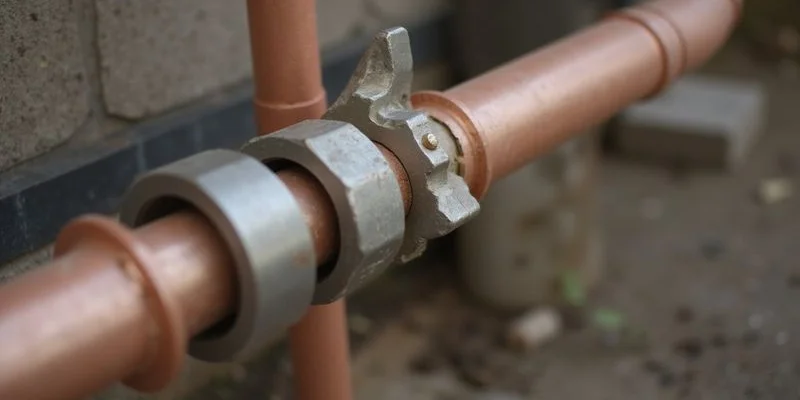
Copper has served as the backbone of South African plumbing for decades. This rigid metal pipe relies on soldered sweat connections or mechanical compression fittings to form watertight joints. Local installations must comply with the SANS 460 specification for domestic water supply.
Our plumbers typically work with three distinct wall thicknesses, classified as Class 0, Class 1, and Class 2. Class 1 is the absolute standard for domestic water supply because it handles main-line pressure perfectly. Class 0 is thinner and generally restricted to exposed, low-pressure applications.
You gain several distinct advantages when using this traditional material:
- Antimicrobial properties: The metal naturally inhibits bacterial growth inside the lines.
- UV resistance: Direct sunlight does not degrade the material, making it ideal for exterior walls.
- Proven lifespan: Installations routinely last 50 years or more under normal municipal conditions.
Experienced professionals appreciate its track record, but the installation process demands specific skills and safety protocols.
What Is PEX Piping?
Cross-linked polyethylene, universally known as PEX, is a flexible plastic tubing that has transformed the local plumbing industry over the last 15 years. This semi-flexible material routes easily through roof cavities and existing walls with very little demolition required. Installers secure the joints using specialized crimping tools or push-fit connections rather than open flames.
We see three main grades on the market, categorized as PEX-A, PEX-B, and PEX-C based on their manufacturing process. Top-tier brands like Afripex manufacture PEX-A using the Engel method, which provides superior flexibility and freeze resistance. PEX-B remains the most widely available option in South Africa and delivers excellent performance for standard domestic applications.
Many property owners choose PEX for these core benefits:
- Cost efficiency: The raw material costs significantly less than metal alternatives.
- Corrosion immunity: Plastic does not rust or suffer from galvanic degradation.
- Fast installation: Crimping joints takes a fraction of the time needed for soldering.
Our technicians rely on ASTM F1807 compliant crimping tools to ensure these connections meet strict safety standards.
Head-to-Head Comparison
Durability and Lifespan
Copper: You can expect a lifespan of 50 to 70 years under ideal conditions. The metal maintains structural integrity against UV light and exterior elements. Water chemistry plays a massive role in actual longevity, especially in older properties. Our repair logs show that copper embedded directly in cement often develops pinhole corrosion within 2 to 10 years due to galvanic action.
PEX: Current data points to an expected lifespan of 40 to 50 years. This plastic material completely resists scale buildup and remains immune to the slightly acidic water conditions that eat away at metal. You must protect it from direct sunlight, as UV radiation degrades the structural integrity very quickly.
Verdict: Metal holds the historical track record, but flexible plastic avoids the cement corrosion issues common in Johannesburg homes. Both materials will likely outlast your stay in the property.
Cost
Copper: Material prices remain heavily dependent on global commodity markets. A single meter of 15mm copper tube currently costs between R165 and R210 in South Africa for 2026. Every joint requires solder, flux, and extensive labor time, driving the final invoice much higher.
PEX: The financial savings here are substantial for any renovation. The equivalent 15mm PEX tubing costs roughly R17 to R30 per meter. We save hours of labor because the flexible pipe requires fewer directional fittings and utilizes rapid cold-press crimp rings.
For a typical three-bedroom home in North Johannesburg, the financial difference is clear:
| Material | Material Cost | Labour Cost | Total Repipe Cost |
|---|---|---|---|
| Copper | R15,000 to R30,000 | R15,000 to R30,000 | R30,000 to R60,000 |
| PEX | R8,000 to R15,000 | R10,000 to R20,000 | R18,000 to R35,000 |
Verdict: Plastic is undeniably cheaper, making it the practical choice for budget-conscious homeowners.
Installation Speed and Disruption
Copper: Completing a full house repipe with rigid metal usually takes our crews 3 to 5 days. We have to cut multiple access holes in your drywall and ceilings to maneuver the straight lengths into position. Soldering joints inside a dusty, timber-filled South African roof cavity also introduces a genuine fire risk that requires careful management.
PEX: Flexible plumbing slashes the project timeline to just 2 or 3 days. Installers simply fish the tubing through existing wall cavities and ceiling spaces, drastically reducing the number of holes cut into your plaster. Fastening a crimp ring takes seconds and involves zero open flames.
Verdict: The faster, flame-free installation makes flexible tubing far superior for occupied homes.
Performance in Johannesburg Conditions
Copper: Metal easily handles the severe temperature swings between hot Highveld summer days and freezing winter nights. It serves flawlessly for exposed outdoor runs where UV protection is mandatory. Copper loses heat very rapidly, which is why national building regulations under SANS 10400 XA require the first two metres of pipe exiting a geyser to be thermally insulated — proper geyser installation always accounts for this.
PEX: Plastic materials naturally retain heat better than metal, reducing thermal bleed from your hot water cylinder. Our winter callouts prove that PEX handles freezing conditions better because the tubing can expand slightly without splitting. You must install protective sleeving over any section exposed to the harsh African sun.
Verdict: Plastic edges ahead for freeze resistance and heat retention, while metal wins for exterior durability.
Water Quality
Copper: The natural antimicrobial properties of this metal actively inhibit bacterial growth inside your plumbing network. This provides a genuine health advantage for drinking water supplies. Prolonged water stagnation can sometimes cause elevated copper levels and a metallic taste, but the material never leaches plastics or synthetic chemicals.
PEX: Early iterations of cross-linked polyethylene faced criticism for imparting a slight plastic odor to drinking water. Manufacturers have solved this issue in modern formulations, though a few sensitive users report a faint taste during the first week of use. It lacks active antimicrobial properties, but it meets all strict SANS 241-1 drinking water quality standards.
Verdict: Metal maintains a clear advantage for providing sterile, high-quality drinking water.
Noise
Copper: Rigid pipes transfer acoustic energy efficiently, making every flush and tap closure audible through the walls. Quick pressure changes cause a loud banging sound known as water hammer. Unsecured or undersized copper lines create a distinct tapping noise that requires mechanical arrestors to fix.
PEX: The inherent elasticity of plastic tubing absorbs kinetic energy and pressure spikes. We rely on recent acoustic studies from the Fraunhofer Institute, which show that PEX generates roughly 12.7 decibels less noise than rigid metal pipes. This material dampens water hammer effects by up to 75%.
Verdict: Flexible tubing guarantees a significantly quieter home.
Maintenance and Repairs
Copper: Fixing a damaged metal line requires specialized tools, professional soldering skills, and completely dry conditions. Acoustic leak detection tools work exceptionally well on these rigid systems because the metal transmits the sound of a leak clearly. Repairing a pipe buried under a concrete foundation requires extensive, expensive jackhammering.
PEX: Repairing plastic tubing is a straightforward process using push-fit connectors or a crimping tool. We install PEX inside a secondary protective conduit when running it under concrete floor slabs. This sleeving technique allows a plumber to simply pull a new pipe through the channel if a leak occurs, saving your expensive floor tiles.
Verdict: Both systems are highly repairable, but sleeved plastic offers massive advantages under concrete.
Which Should You Choose?
Choose Copper If:
- Long-term durability is your top priority and the budget is flexible.
- Water quality and antimicrobial properties are essential for your family.
- You need to route pipes along exterior walls exposed to direct sunlight.
- You are constructing a premium home where high-end finishes matter.
- Your plumbing contractor specializes in high-quality soldering.
Choose PEX If:
- Budget constraints demand a 30% to 50% saving on installation costs.
- You want to limit the number of access holes cut into your walls.
- You are updating an older property and need to snake pipes through tight spaces.
- You want a quiet system that absorbs loud water hammer pressure spikes.
- Your local municipal water is slightly acidic and prone to corroding metal.
The Hybrid Approach
Our most successful repiping projects in North Johannesburg often utilize a blended strategy. Plumbers run copper for exposed outdoor sections where UV resistance and visual aesthetics matter most. They switch to PEX for all concealed runs through the ceiling cavities, dry walls, and floor slabs to capture the cost savings and ease of installation.
This specific strategy delivers the exact benefits of both materials without breaking the bank.
Compliance and Standards
No matter which material you select, South African law dictates that the installation must comply strictly with SANS 10252-1 for water supply. You must hire a qualified, PIRB-registered plumber to execute the work. They will inspect the final pressure tests and issue a formal Certificate of Compliance to validate the project.
We guarantee that both materials hold full approval under national building regulations. Your final decision comes down to personal preference, specific property requirements, and available budget.
Our regional network covers Sandton, Bryanston, Fourways, Randburg, Midrand, and all surrounding suburbs. Reach out for professional advice on the best piping layout or to request detailed quotes for pipe repair and replacement from our verified experts.

Conclusion
Finding the exact answer to Copper vs PEX Piping: Which Is Better for South African Homes? comes down to your specific property layout and budget limits. We guarantee that both materials provide excellent service when installed by certified professionals.
Reach out to our regional network today to book a site inspection and secure a safe, compliant piping system for your property.