Gas vs Solar Geysers: The Best Alternative During Load Shedding
Comparing gas and solar geyser options for South African homeowners looking to reduce reliance on Eskom.
We have noticed a massive shift in how property owners view energy independence this year as they search for the definitive answer on Gas vs Solar Geysers: The Best Alternative During Load Shedding.
South Africa celebrated over 300 days without national load shedding by early 2026.
Our clients, however, are now facing a different crisis: NERSA’s newly approved 9.01% municipal tariff hike and steep fixed capacity charges.
That standard electric geyser, which consumes about 40% of a household’s power, has become a major financial liability.
We will break down the true costs and performance of gas and solar options so you can make a smart, future-proof choice.
Understanding Gas vs Solar Geysers: The Best Alternative During Load Shedding
We install hundreds of water heating systems across Gauteng every year. Understanding the core mechanics of each option is the first step in finding the right fit for your property.
Gas Geysers
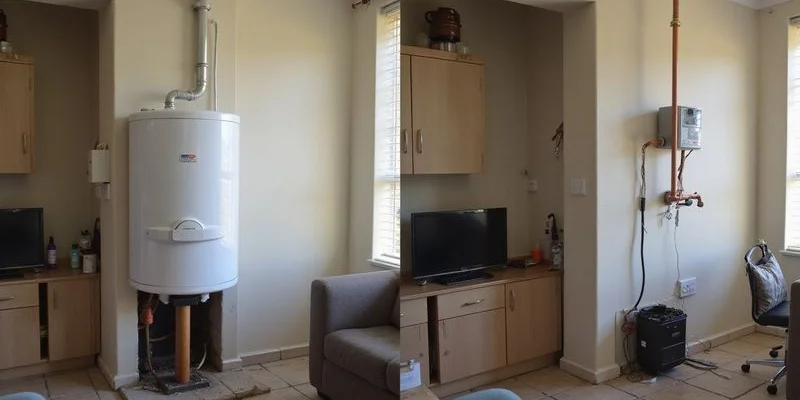
Our technicians always recommend instant heating technology for properties with limited space. A gas geyser heats water on demand using liquefied petroleum gas (LPG) or natural gas. Our teams frequently install top local brands like Dewhot and Alva because manufacturers design them specifically for South African conditions. When you open a hot water tap, cold water flows through the unit, triggering a gas burner that heats the water as it passes through a heat exchanger.
We size these units based on flow rate, meaning a 16-liter model delivers exactly 16 liters of hot water per minute. The unit delivers hot water immediately and continuously for as long as the tap remains open.
Two main types dominate the market:
- Instantaneous (tankless) gas geysers: Heat water on demand with no storage tank. These are the most common type installed in South African homes.
- Gas storage geysers: Heat water and store it in an insulated tank, similar to an electric geyser but powered by gas.
Solar Geysers
We view solar thermal energy as the ultimate long-term investment for reducing utility bills. A solar geyser uses energy from the sun to heat water, storing it in an insulated tank (typically on the roof or in the ceiling). Our installations in Johannesburg rely heavily on the thermosiphon principle, where naturally rising hot water circulates without needing a mechanical pump.
Two main types of solar collector technology exist:
- Flat plate collectors: A dark, flat panel absorbs solar radiation and transfers the heat to water flowing through internal channels. These are durable and well-suited to Johannesburg’s climate, easily resisting summer hail.
- Evacuated tube collectors: A series of glass tubes contains a heat pipe. These operate more efficiently in cooler conditions and on overcast days, but the tubes are more fragile.
Our standard approach includes adding an electric element as a backup for days with insufficient sunshine. Frost protection is a critical detail in our Highveld climate, so indirect systems that use a glycol mixture help prevent pipes from freezing and bursting overnight — a frozen pipe burst requires immediate emergency plumbing intervention. Homeowners can also pair some systems with a heat pump for a fully off-grid solution.
Performance During Load Shedding
We know grid instability remains a massive concern for businesses and families alike. This is the critical question for most North Johannesburg homeowners, so let us address it directly.
Gas Geysers: Full Operation During Load Shedding
Our team loves the absolute reliability of gas when the local power grid fails. Gas geysers operate completely independently of the electrical grid. We ensure standard D-cell batteries or a piezoelectric spark powers the ignition, and the system controls the gas flow mechanically.
They require no electricity whatsoever. Whether Eskom implements Stage 6 load shedding or your neighborhood suffers from localized cable theft, your unit remains unaffected. Your gas geyser will deliver hot water on demand, every time.
Verdict: Complete load shedding independence.
Solar Geysers: Partial Operation During Load Shedding
We find that solar technology requires a bit more strategic planning for completely dark days. A solar geyser will continue to heat water using sunlight during load shedding, provided there is sunshine. Our passive system installations rely on natural circulation, requiring zero electricity to move the water.
However, the electric backup element will not function during load shedding, which means:
- On sunny days, you will have hot water regardless of grid failures.
- On overcast days or in winter (when Johannesburg’s shorter 8.5-hour daylight window produces less solar energy), you may run out of hot water if the electric backup cannot top up the temperature.
- If load shedding occurs in the evening and you empty your stored hot water, you must wait to heat more until the sun rises or the power returns.
- Smart management tools like a GeyserWise controller will turn off during an outage unless you install a small 12V backup battery.
Verdict: Partial load shedding independence, offering excellent performance on sunny days but limited capabilities on overcast days and at night.
Cost Comparison
Purchase and Installation Costs
| System Type | Equipment Cost | Installation Cost | Total Installed |
|---|---|---|---|
| Gas geyser (16L instantaneous) | R5,000 - R12,000 | R3,000 - R6,000 | R8,000 - R18,000 |
| Gas geyser (20L instantaneous) | R8,000 - R16,000 | R3,000 - R6,000 | R11,000 - R22,000 |
| Solar geyser (150L flat plate) | R12,000 - R20,000 | R5,000 - R10,000 | R17,000 - R30,000 |
| Solar geyser (200L evacuated tube) | R15,000 - R28,000 | R5,000 - R10,000 | R20,000 - R38,000 |
| Heat pump geyser (150L) | R15,000 - R25,000 | R4,000 - R8,000 | R19,000 - R33,000 |
We recommend comparing the upfront prices against the projected monthly utility savings. Gas geysers have a significantly lower upfront cost. Solar geysers require a larger initial investment but offer lower ongoing running costs.
Monthly Running Costs
Our latest data from March 2026 shows the maximum retail price of LPG hovering around R33.84 per kilogram. Gas geyser running costs depend on your household’s hot water consumption and these fuel prices.
For a typical North Johannesburg family of four:
- Average monthly gas consumption: 1 to 2 × 19kg cylinders
- Current LPG price: approximately R640 to R650 per 19kg cylinder
- Monthly cost: R640 to R1,300
We appreciate that solar geyser running costs are minimal, remaining essentially free on sunny days. You will still use electricity for the backup element during winter and on overcast days.
For a typical household:
- Summer months: R50 to R150 per month (minimal backup use)
- Winter months: R200 to R500 per month (more backup use)
- Annual average: R100 to R300 per month
Our calculations show a standard electric geyser typically costs R1,200 to R2,000 per month to run following NERSA’s April 2026 municipal tariff hikes of 9.01%. Standard household utility bills are spiking even higher due to the new fixed Generation Capacity Charges, making both gas and solar alternatives significantly cheaper over time.

Advantages and Disadvantages
Gas Geyser Advantages
We see several immediate lifestyle benefits to choosing gas. The core perks include:
- Complete load shedding independence: Hot water on demand, any time, regardless of grid status.
- Instant hot water: No waiting for water to heat; turn the tap and you have hot water in seconds.
- Lower upfront cost: Significantly cheaper to purchase and install than solar.
- Space efficient: Compact wall-mounted units require no roof installation, which is ideal for high-density complexes in Randburg.
- Unlimited hot water: No tank to run empty, meaning hot water flows as long as you need it.
- Easy installation: Installers can fit these units in most homes without structural modifications.
Gas Geyser Disadvantages
Our field teams also want you to be aware of the daily realities of gas power. The main drawbacks are:
- Ongoing fuel costs: LPG is not free, so you will buy gas regularly.
- Gas cylinder management: You need to monitor gas levels and arrange refills or exchanges.
- Weather vulnerabilities: Outdoor installations require a protective weather box or wind guard to stop Highveld breezes from blowing out the pilot flame.
- Carbon monoxide risk: Improper installation or ventilation can create dangerous carbon monoxide buildup, so always use a SANS-registered installer.
- Temperature fluctuations: Some lower-quality units struggle to maintain a consistent temperature when multiple taps are open.
Solar Geyser Advantages
We heavily favor solar for long-term equity and maximum monthly savings. Consider these major benefits:
- Lowest running costs: Free energy from the sun means minimal monthly expenses, shielding you from yearly Eskom increases.
- Environmental benefit: Significantly reduces your carbon footprint.
- Property value: Solar installations can increase your property value and appeal to eco-conscious buyers.
- Long lifespan: Quality solar collectors can last 20 to 25 years with proper maintenance.
- Government incentives: Tax rebates and incentives may be available for solar installations.
Solar Geyser Disadvantages
We must point out that a solar setup demands careful maintenance and initial capital. The specific limitations include:
- Higher upfront cost: Two to three times the purchase and installation cost of gas.
- Weather dependent: Performance drops significantly on overcast days and in winter.
- Not fully load shedding proof: The electric backup element still needs grid power.
- Roof requirements: Needs a north-facing roof area with no shading, which is not suitable for all properties.
- Maintenance: Hail can damage collectors, and you must replace the sacrificial anode every two years to prevent tank rust.
Which Is Best for North Johannesburg?
We customize every recommendation based on the specific architecture and lifestyle of the household. The right choice depends on your priorities, budget, and property characteristics.
Choose Gas If:
- Load shedding resilience is your primary concern, and you want guaranteed hot water regardless of grid status or weather.
- You have a limited budget for the initial installation.
- Your roof is not suitable for solar panels (south-facing, shaded by trees, or insufficient space).
- You live in a strict residential estate, like many in Sandton or Broadacres, where Homeowners Associations (HOAs) prohibit visible roof tanks.
- You have a large household that uses hot water at unpredictable times throughout the day and night.
Choose Solar If:
- Reducing your monthly costs is the priority, and you can afford the higher upfront investment.
- You have a suitable north-facing roof with no shading and adequate space.
- Environmental sustainability matters to you.
- Your household’s hot water use is primarily during the day when solar energy is available.
- You are planning to stay in the property long-term and can benefit from the typical 3-to-5-year payback period.
Consider a Hybrid Approach
We are installing a massive number of combined setups for clients who want the ultimate safety net. Some homeowners in Fourways, Lonehill, and Sandton have opted for a combined system: a solar geyser for the primary hot water supply with a small gas instant unit as backup.
Our preferred hybrid design utilizes the lowest running costs of solar with the guaranteed availability of gas during power outages and on overcast days. This eliminates the need for an electrical backup element entirely, severing your water heating from the Eskom grid once and for all.
Compliance Requirements
We refuse to compromise on safety or cut corners on certification. Regardless of which system you choose, the installation must be performed by qualified, registered professionals. Our industry is strictly regulated to protect your property and your family.
- Gas geysers: Must be installed by a registered gas installer who will ensure compliance with SANS 10087-1 regulations and issue a Certificate of Conformity (CoC) for the gas line.
- Solar geysers: The plumbing connections must comply with SANS 10254, and a PIRB Certificate of Compliance must be issued.
- Both systems: Must comply with the National Building Regulations and your local municipality’s bylaws.
Never use an unregistered installer for either system. Unlicensed modifications will immediately void your homeowner’s insurance policy with major providers like Santam or OUTsurance, and create severe safety risks. Read more about why PIRB compliance matters.
For professional geyser installation, whether using gas, solar, or a hybrid setup, our network of registered plumbers serves all North Johannesburg suburbs with compliant installations and proper certification.
Making the Switch
We know that upgrading your water heating system is a major financial decision.
The initial cost might seem steep, but the monthly utility savings and uninterrupted comfort provide immense value.
Our team is ready to evaluate your property and calculate exactly how much you can save with either system.
Contact us today for a site inspection and take the first step toward total energy independence by settling the debate on Gas vs Solar Geysers: The Best Alternative During Load Shedding.